

Determining when a business is ready for strategic finance help is about identifying the inflection points where basic bookkeeping and reactive cash management no longer protect value or enable growth. Strategic finance steps in to convert financial data into forward-looking decisions: clearer cash flow visibility, faster fundraising readiness, lower burn-rate risk, and a defined path to profitability. The guidance below is written for CEOs, startup founders, and growth-stage owners who need a practical playbook to recognize readiness, evaluate options (including fractional and part-time CFO models), and implement finance-first changes that move the needle.
Begin with observable signals and outcomes. The next section breaks those signals into practical problems you can diagnose immediately, and the subsequent sections show the exact mechanisms strategic finance uses to solve them.
Signs your company needs strategic finance leadership
Visible cash problems and unreliable runway
When day-to-day survival dominates conversations—collections are late, vendors threaten service interruptions, payroll feels risky—you have a cash governance problem, not just a timing issue. Look for these measurable symptoms: an expanding gap between cash balances and projected cash needs; a burn rate that oscillates unpredictably; frequent one-off cash infusions; and a mismatch between invoice dates and real collections. These are red flags that simple bookkeeping and sporadic spreadsheets are insufficient.
Strategic finance addresses this by implementing a disciplined cash flow forecast with weekly and monthly horizons, integrating receivables and payables aging into scenario-based models, and creating liquidity triggers tied to operational decisions. A robust forecast converts unknowns into actionable levers—extend payables, accelerate collections, renegotiate vendor terms, or temporarily curtail discretionary spend—so the company maintains a predictable runway.
Accounting and operational complexity that's causing noise
If month-end takes weeks, reconciliations are incomplete, revenue recognition is inconsistent, or multiple systems produce conflicting numbers, the finance function is limiting rather than enabling the business. Typical operational issues include: manual journal adjustments, lack of a coherent chart of accounts, fragmented invoicing processes, and no standardized close checklist. These operational gaps erode management trust in financial reports and slow decision cycles.
Strategic finance prioritizes data integrity through a two-track approach: stabilize current reporting (close-clean-repeat) then build scalable systems and processes. That means setting standard account mappings, automating routine reconciliations, implementing a tight month-end close cadence (30/45/60-day goals depending on stage), and establishing a single source of truth for revenue and cash data.
Growth inflection points that require forecasting and stress testing
When you’re adding new products, entering new markets, expanding headcount quickly, or managing seasonality, the complexity of choices multiplies. Executives need to anticipate how hiring plans affect gross margins, how new product pricing changes unit economics, and how market entry drives working capital needs. The absence of a credible plan here increases the risk of over-hiring, margin erosion, and surprise funding needs.
Strategic finance introduces disciplined scenario planning and sensitivity analysis that quantify upside and downside paths. These practices define decision thresholds—e.g., “we can hire X reps if conversion reaches Y and CAC payback is Z months”—so every growth investment has clear return expectations and exit conditions. Models are built to be transparent and auditable so stakeholders can trace assumptions to outcomes.
Fundraising, M&A or investor reporting is imminent or becoming frequent
Fundraising readiness is more than a polished pitch deck. Investors want reproducible forecasts, supporting unit economics, organized diligence materials, and clear governance. Likewise, potential acquisitions or strategic partnerships demand consolidated financials, forward-looking synergies, and harmonized accounting. If you’re approaching investors or counterparties, having a finance leader who knows the diligence playbook is essential.
Strategic finance prepares the company by standardizing the financial model, building a clean data room, and packaging investor-grade metrics: ARR or revenue run-rate segmentation, churn and cohort analysis, gross margin drivers, CAC and LTV calculations, and a succinct cap table with dilution scenarios. This reduces time to close, improves valuation leverage, and minimizes deal friction.
Key performance indicators are missing, misaligned, or misused
KPI clutter and vanity metrics conceal the real health of the enterprise. CEOs and boards need a small set of trusted indicators that link strategy to execution—sales velocity, cohort retention, contribution margin per unit, days sales outstanding (DSO), days payable outstanding (DPO), and net cash burn. If teams track dozens of inconsistent metrics, or worse, change definitions to “look good,” strategic decisions are being made on weak signals.
Strategic finance develops a KPI framework that ties indicators to management actions. For each KPI, the finance leader defines the numerator/denominator, cadence, owner, and tolerance band. That structure enables proactive management—e.g., if DSO goes above a threshold, push collections or change payment terms—rather than reactive explanations after the fact.
Transitioning from symptoms to solutions, the next section explains precisely what strategic finance delivers and how those deliverables produce concrete business benefits.
What strategic finance provides and the measurable benefits
Different levels of financial leadership and expected outputs
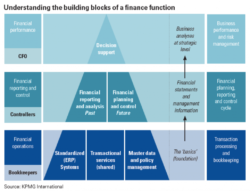
Businesses commonly confuse bookkeeping, controllership, and strategic finance. A controller focuses on accuracy—closing the books, compliance, tax, and internal controls. A fractional or part-time CFO adds strategic layering: forecasting, capital strategy, investor relations, and cross-functional financial guidance. Full-time CFOs carry those responsibilities but with deeper involvement in corporate strategy and longer-term capital markets navigation.
Deliverables from strategic finance typically include: a comprehensive rolling forecast, monthly and ad-hoc scenario models, consolidated KPI dashboards, cost-to-serve analysis, capital raise models and materials, vendor and pricing analyses, and a prioritized finance transformation roadmap. Each deliverable maps directly to management outcomes—longer runway, improved fundraising terms, lower effective cost of capital, and more predictable margins.
How better planning reduces risk and aligns resources
Strategic finance translates uncertainty into decision frameworks. Through FP&A disciplines—monthly reforecasting, rolling 12-month views, and sensitivity testing—companies can plan for probability-weighted outcomes rather than react when cash or performance deviates. This reduces risk by enabling pre-emptive actions: slowing hiring, phasing product launches, or triggering contingency funding options.
Case examples are illustrative: a business that adopted weekly rolling cash models reduced surprise cash crises by 80% within one quarter because management could see when collections lagged and proactively extended vendor terms. Another company moved from quarterly to monthly forecasts and cut discretionary spend by 15% by prioritizing initiatives with the shortest payback periods.
Operational levers that improve cash and margin
Strategic finance finds cash and margin through operational levers that are often overlooked. These include optimizing billing cadence and collection incentives, refining payment terms, negotiating supplier discounts, redesigning pricing to capture value, and reducing cost of goods sold (COGS) through better procurement practices. Each lever requires data: cost per customer acquisition, contribution margin per product line, inventory turnover, and supplier payment cycles.
For example, refining pricing segmentation can raise average order value; tightening credit checks and offering small discounts for early payment can compress DSO; and changing supplier contracts from fixed to variable can realign costs with revenue seasonality. Strategic finance quantifies the impact of each lever and sequences implementation to protect customer relationships while improving cash flow.
Fundraising readiness and value creation for investors
Investors buy credible stories backed by disciplined numbers. Strategic finance provides that credibility through investor-grade historicals, forward models with clear assumptions, sensitivity views, and a narrative linking capital use to milestones that unlock valuation steps. The outcome is not just capital; it’s better capital: shorter diligence cycles, fewer contentious adjustments during due diligence, and stronger negotiating leverage.
For venture-backed companies, strategic finance prepares metrics aligned with capital markets expectations: gross margin trends, cohort LTV/CAC ratios, churn decomposition, and ARR growth efficiency. For private-equity or acquirers, the focus shifts to normalized EBITDA, recurring revenue stability, and identified integration synergies. Each audience wants a different story, and strategic finance tailors the financial narrative accordingly.
Stronger governance, better board relationships, and audit readiness
Boards require concise, reliable reporting and forward visibility. Strategic finance delivers monthly board packs that combine trend analysis, variance explanations, and a forecast with explicit assumptions and sensitivity cases. This reduces board-level surprises and builds governance confidence.

Additionally, operationalizing basic controls recommended by leading accounting bodies (such as segregation of duties, approval workflows, and audit trails) reduces fraud and error risk while shortening external audit cycles. Ready financials mean fewer audit adjustments, lower audit fees, and a smoother path for any transaction.
Having established the benefits, the next section helps decide whether to engage a fractional/part-time CFO or hire a full-time chief financial officer.
Choosing between a fractional/part-time CFO and a full-time CFO
Decision criteria based on stage, complexity, and runway
Three factors guide the choice: the complexity of the finance function, the growth trajectory and runway needs, and the budget for leadership. If problems are tactical (process clean-up, forecasting, fundraising prep) and episodic, a fractional CFO often provides the best ROI: experienced leadership at a fraction of full-time cost with a clear deliverable set. If the company faces sustained complexity—multiple business units, significant M&A activity, imminent IPO, or continuous capital market engagement—a full-time CFO is warranted.
Consider headcount and revenue rules of thumb as directional signals (not strict tests). Companies with fewer than 100 employees or under $20–30M in revenue often benefit from part-time strategic leadership, provided systems are consolidating. Once there is multi-product complexity, international operations, or recurring public-market style reporting needs, the full-time hire becomes more appropriate.
Typical use cases where fractional CFOs deliver highest value
Fractional CFOs excel at discrete initiatives: preparing for a funding round, establishing forecasting and KPI cadence, implementing a modern financial stack, negotiating bank facilities, or supporting one-off transactions. They provide strategic judgement, create repeatable artifacts, and coach internal teams—delivering long-term capabilities while remaining cost-effective. Their engagements often include knowledge transfer and an exit plan that leaves the company with reusable models and processes.
For instance, a startup that needs a 6–9 month runway extension and a clean 13-week cash model to present to investors benefits more from a part-time CFO than a full-time hire who would underutilize capacity in the short term.
When a full-time CFO is necessary and what they should be tasked with
Hire a full-time CFO when finance work is strategic and continuous: long-term capital planning, public- or near-public reporting readiness, large cross-border tax and legal complexity, sustained M&A activity, or when the board requires a residency-level financial partner. Personiv -time CFO should be tasked with building an internal finance leadership bench, driving corporate finance transactions, owning capital allocation strategy, and embedding finance into operational decision-making across the organization.
Expect the full-time CFO to deliver organizational design (hiring controllers and FP&A managers), to act as the primary investor liaison, and to serve as a strategic peer to the CEO on matters beyond accounting—pricing strategy, capital returns, and strategic partnerships.
How to structure engagements for success
Whether fractional or full-time, structure matters. Start with a clear scope: deliverables, cadence (weekly, biweekly, monthly), and success metrics (e.g., reduce close time to X days, extend runway by Y months, achieve fundraising target Z). Build knowledge transfer into the contract so capabilities remain after the engagement ends. Define escalation pathways and stakeholder responsibilities so finance outputs are consumed and acted upon.
Payment models can be fixed-fee plus success-based components (e.g., bonus for closing fundraising or reducing DSO by specified days). Include a clause for revisiting scope as the business evolves—fractional CFO engagements often expand as trust and impact grow.
With the right leader selected, implementation becomes the next critical phase—this section provides a tactical roadmap to make strategic finance operational.
Practical roadmap for implementing strategic finance
Diagnostic: start with a focused financial health assessment
Begin with a short, structured diagnostic that answers: where is cash today, what is the realistic runway, which revenue streams are profitable, where are controls weakest, and what are the five most impactful operational levers? Use interviews, ledger reviews, a one-page cash map, and a KPI inventory. This is not a full audit but a surgical assessment that surfaces the top pain points and opportunities.
Deliverables from the diagnostic should include a prioritized remediation list with estimated benefits and implementation effort. This becomes the basis of the 30/60/90 plan.
First 30/60/90 days: prioritized, high-impact actions
In the first 30 days focus on stabilization: clean AR and AP aging, a reliable cash forecast, and a rapid close on the previous month’s accounts. In 60 days, standardize reporting (dashboard and board pack), build a rolling 12-month forecast, and negotiate immediate working capital improvements (payment terms, collections cadence). By 90 days, implement at least one systems change (billing automation, integrated bank feeds, or expense policy enforcement) and present a capital plan if runway or growth capital is required.
These milestones are measurable: reduce DSO by X days, close books in Y days, achieve a consistent weekly cash forecast error under Z%. Executing these quickly builds credibility and demonstrates how finance drives business outcomes.
Building the financial infrastructure and tools
Long-term value requires robust systems: an accounting platform that provides a reliable ledger, an FP&A tool or spreadsheet architecture for modeling, a consolidated dashboard (BI tool) for operational KPIs, and a controlled data pipeline between sales, payroll, and accounting systems. Choose tools with integration-first criteria: transaction-level visibility, API connectivity, and role-based access.
Design the chart of accounts to support management reporting, not just tax reporting. Align product, customer, and cost center tags so you can report unit economics by cohort and channel. Implement automated reconciliations where possible and keep manual interventions documented and minimal.
Hiring, scaling the finance team, and knowledge transfer
Once systems and processes are stable, scale the team deliberately. Common first hires after a fractional CFO engagement are a senior controller to own monthly close, an FP&A manager to run forecasts and scenario modeling, and an analyst to maintain dashboards. The fractional leader should build standardized operating procedures, train the hires, and gradually hand over responsibilities alongside a documented playbook.
Retention of institutional knowledge is critical—use version-controlled documentation (shared drives or documentation tools) and recorded walkthroughs of models and processes. Define promotion pathways inside the finance team so institutional capacity deepens rather than being replaced when hires leave.
With infrastructure and people in place, anticipate and manage risks that commonly derail finance transformations.
Common pitfalls and how to avoid them
Forecast optimism and confirmation bias
Humans and companies are optimists by design. Forecasts that only reflect best-case scenarios will mislead boards and founders. Avoid bias by requiring multiple scenarios (base, downside, upside) and anchoring assumptions to verifiable inputs: historical conversion rates, contract-backed revenues, and vendor lead times. Use challenge sessions with cross-functional stakeholders as a check on overly rosy assumptions.
Institutionalize stress testing: ask what-if questions about customer concentration loss, a 20% revenue shortfall, or a supplier disruption. A forecast that survives these tests is credible and useful for decision-making.
Poor communication and misaligned incentives
Finance outputs become meaningless if stakeholders do not understand or act on them. Avoid presenting dashboards without clear next steps. Tie KPIs to behaviors—if sales incentives reward bookings without margin discipline, margin leakages will persist. Finance should collaborate with HR and sales leadership to align incentive plans with company profitability and cash objectives.
Ensure regular, concise communication: a one-page executive summary, three trend charts, and two asks for the leadership team. Clarity and brevity promote action.
Over-controlling the organization or overengineering controls
Controls are necessary, but too many approvals and rigid rules slow growth. Adopt a risk-based approach: implement strong controls where the monetary exposure or reputational risk is highest (payments, revenue recognition, vendor onboarding) and lightweight controls where speed matters (minor expense approvals). Revisit controls periodically and simplify where possible.
Tool proliferation and data fragmentation
Building a modern stack often tempts teams to add point solutions for reporting, payroll, CRM, and procurement without integration. The result is a data reconciliation nightmare. Prioritize integration and data ownership: keep the ledger as the source of truth, and ensure other systems feed clean, audit-ready data into it. Prefer fewer tools that integrate well over many that do not.
Now consolidate the guidance into a short, tactical checklist you can act on this week.
Concise summary and immediate next steps
Ready for strategic finance help if you experience cash unpredictability, operational accounting gaps, growth inflections, frequent fundraising needs, or KPI confusion. Strategic finance brings forecasting, scenario planning, cash optimization, fundraising readiness, and governance to reduce risk and create value.
- Run a two-week diagnostic: produce a 13-week cash forecast, AR/AP aging, and a one-page KPI inventory.
- Prioritize three fixes with measurable outcomes for 30/60/90 days (e.g., reduce DSO by X days, shorten close to Y days, implement weekly cash cadence).
- Decide leadership model: engage a fractional CFO for short-term transformation and capability-building, or hire a full-time CFO if complexity and strategic capital activity are persistent.
- Standardize a small set of KPIs (revenue run-rate, churn, CAC/LTV, gross margin, DSO, runway) with defined owners and cadence.
- Implement a single source of truth: choose an accounting platform and align the chart of accounts to management reporting needs.
- Embed controls that protect cash and accuracy but avoid unnecessary friction; document processes and train the team for hand-off.
- Prepare investor-ready materials: clean historicals, a stress-tested model, and a concise use-of-proceeds plan.
- Schedule a 30-day checkpoint to validate improvements and decide on the next phase of scaling the finance function.
Taking these steps converts financial uncertainty into a strategic advantage: longer runway, cleaner diligence, faster decision-making, and a clear path to profitable growth.